
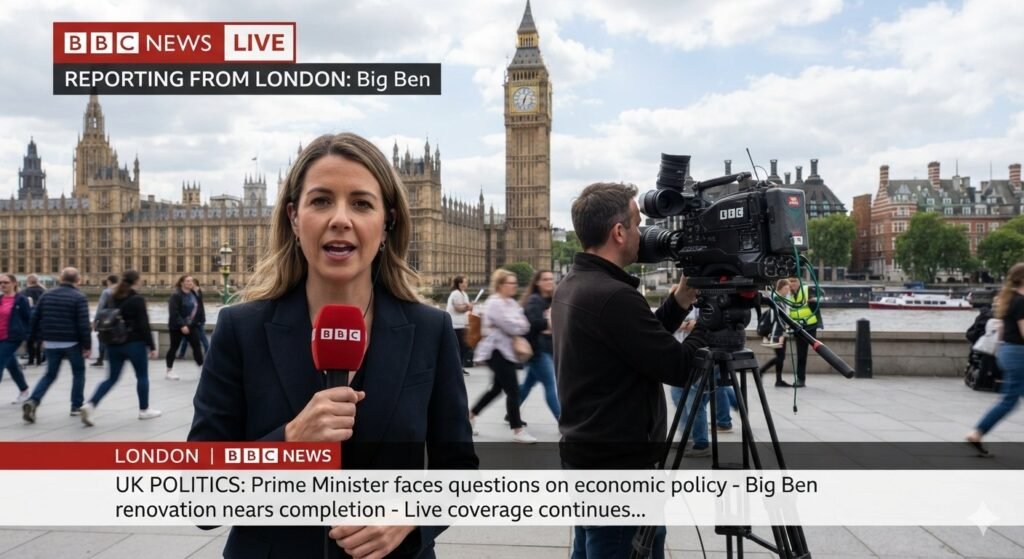

bbc news is one of the world’s best-known news organizations, providing reporting on events from the United Kingdom and around the globe. For decades, readers and viewers have used BBC journalism to follow politics, business, science, technology, culture, sports, weather, and major international events. Its news operation reaches people through websites, mobile apps, television, radio, podcasts, videos, and live coverage.
In today’s fast-moving media environment, news can spread around the world within seconds. Because of that, reliable reporting, careful fact-checking, clear explanations, and transparent corrections have become especially important. BBC News operates across many of these formats, giving audiences different ways to understand developing stories.
The BBC’s international digital services have also changed over time. Current BBC.com and BBC app offerings include major news stories, editor-selected features, video, live coverage, technology, culture, business, travel, science, health, and sustainability content.
What Is BBC News?
BBC News is the news operation of the British Broadcasting Corporation, commonly known as the BBC. It produces journalism for audiences in the UK and internationally.
Its coverage includes both breaking news and longer-form reporting. A breaking story may be updated several times during a single day as new facts become available. A feature article, on the other hand, may explore a subject in greater depth and provide background information.
The organization covers a wide range of subjects, including:
- UK and international news
- Politics and public affairs
- Business and economics
- Science and technology
- Health
- Climate and the environment
- Culture and entertainment
- Sports
- Travel
- History
- Weather
- Human-interest stories
This broad approach is one reason people may encounter BBC journalism in many different parts of their daily media routine.
The History and Development of BBC News
The BBC has a long history in broadcasting, and its news operation developed alongside changes in radio, television, and later the internet.
Radio played an important role in the early development of BBC journalism. As television became more common, news bulletins and dedicated programmes gave viewers another way to follow important events.
Later, the arrival of the internet transformed the news industry. Instead of waiting for a scheduled television bulletin or radio programme, audiences could read reports whenever they wanted.
Digital publishing also introduced new possibilities. News organizations could combine written reporting with photographs, video, graphics, interactive features, and live updates.
Over time, BBC News expanded its digital presence to serve audiences who consume information on computers, smartphones, and other connected devices.
How BBC News Covers Breaking Stories
Breaking news requires speed, but speed alone isn’t enough. A newsroom must also determine what is known, what isn’t known, and which information can be independently supported.
When a major event happens, early reports may contain incomplete information. Numbers, locations, causes, and other details can change as authorities and journalists learn more.
A responsible news process therefore involves several important principles:
- Confirming important facts where possible
- Identifying reliable sources
- Separating confirmed information from claims
- Updating stories as new evidence appears
- Correcting errors when they are identified
- Providing context instead of presenting isolated facts
This matters because an incorrect statement can spread rapidly online. Once a claim has been repeated thousands of times, correcting it can be much harder.
BBC Help also provides a process for readers who believe an online news article contains a factual or grammatical error, showing that accuracy feedback is part of its digital support system.
BBC News and International Coverage
One of the major characteristics of BBC News is its international focus. Its journalism covers events beyond Britain, allowing readers to follow developments in different regions.
International reporting can be challenging because journalists need to understand local politics, culture, history, language, economics, and social conditions. A story that seems simple from a distance may become much more complicated when local context is considered.
BBC journalism can cover subjects such as:
- International conflicts and diplomacy
- Elections and government decisions
- Global economic developments
- Natural disasters
- Climate-related events
- Scientific discoveries
- International sporting competitions
- Cultural developments
- Major social issues
For readers, this wider perspective can be useful because it places individual events inside a broader global context.
BBC News on the Website and App
Digital access has become an important part of modern journalism. The BBC provides news through its website and app, allowing users to browse stories from different categories.
According to current BBC Help information, the BBC.com homepage includes major stories alongside selected content from areas such as culture, technology, history, and business. The News section provides deeper access to BBC journalism, while separate sections include Culture, Innovation, Earth, Sport, Business, and Travel.
The digital structure also includes dedicated areas for video and live coverage.
This means readers don’t have to consume every story in the same way. Someone interested in technology can focus on technology coverage, while another person may prefer international news, business, sport, or culture.
Live News and Video Coverage
Live coverage is particularly useful when an event is developing quickly.
Instead of publishing one article and leaving it unchanged, live reporting can provide a timeline of important developments. Readers can follow updates as information becomes available.
BBC.com currently describes a Live section for following ongoing coverage across News and Sport. It also has a Video section for news videos and multimedia storytelling.
Video can add another layer to reporting. Interviews, press conferences, maps, demonstrations, and scenes from an event may help audiences understand a story more clearly than text alone.
Still, viewers should remember that video provides only one part of a story. Good journalism combines visual evidence with reporting, context, and verification.
BBC News on Radio and Audio
Although digital media has grown rapidly, radio and audio remain important parts of news consumption.
The BBC provides radio journalism through several services. For audiences outside the UK, BBC Radio 4 and BBC World Service English remain available through BBC.com and the BBC app. The BBC also provides international access to live streams of various other radio stations.
Podcasts provide another way to follow journalism. They can be particularly useful for people who want longer explanations rather than short headlines.
Audio journalism also has a practical advantage: people can listen while travelling, exercising, studying, or doing routine tasks.
BBC News, Accuracy, and Trust
Trust is one of the most important issues in modern journalism.
A news organization earns trust not simply by being well known, but by consistently working to provide accurate information and by being open when mistakes happen.
Readers should still think critically about everything they read, regardless of the publication. Even established news organizations can make errors, especially when covering rapidly developing events.
A useful approach is to ask:
- Who reported the information?
- What evidence is provided?
- Is the information confirmed?
- Are different viewpoints represented?
- Is the story developing?
- Has the article been updated?
- Is the statement a fact, analysis, or opinion?
These questions aren’t limited to BBC News. They’re useful habits for anyone navigating today’s information environment.
How BBC News Differs From Social Media
Social media has changed how people discover news. A person may see a headline, video, or short post before ever visiting a traditional news website.
However, social media posts and professional news reports serve different purposes.
A social media post may be extremely short and provide little context. It might also be based on personal observation, an unverified claim, or information copied from another account.
A newsroom generally has more space to explain:
| Feature | News Reporting | Social Media Post |
| Main purpose | Inform and explain | Share or communicate quickly |
| Context | Usually greater | Often limited |
| Verification | Editorial processes may apply | Varies widely |
| Updates | Articles can be updated | Original post may remain unchanged |
| Sources | Usually identified | May or may not be provided |
| Length | Can provide detailed reporting | Often brief |
This doesn’t mean every social media post is unreliable. Some eyewitnesses, experts, organizations, and journalists use social platforms responsibly. The key is to evaluate the source and evidence.
BBC News and Different Types of Journalism
Not every BBC News story has the same purpose.
Some reports focus on immediate facts. Others investigate complex subjects, interview experts, explain background information, or explore how an issue affects ordinary people.
Common forms include:
Breaking News
Breaking news reports focus on major developments that have just happened or are still unfolding.
Analysis
Analysis explains the meaning and possible significance of events. It may provide background and expert perspectives.
Investigative Journalism
Investigative reporting involves deeper research into subjects that may require extensive evidence gathering and verification.
Features
Feature articles often tell a story in greater depth and may focus on people, communities, history, science, culture, or unusual events.
Interviews
Interviews allow journalists to obtain information directly from politicians, experts, witnesses, researchers, public figures, and other sources.
Understanding these different formats can help readers interpret what they’re reading.
Technology and the Future of BBC News
Technology continues to change how journalism is produced and consumed.
Smartphones have made news accessible almost everywhere. Artificial intelligence, data visualization, mobile video, podcasts, live blogs, and personalized digital experiences are also influencing the media industry.
For news organizations, the challenge is to use new technology without losing the basic principles of journalism.
The future of news may involve:
- More interactive reporting
- Better mobile experiences
- More multimedia storytelling
- Data-driven journalism
- Expanded podcast formats
- Faster live updates
- Improved accessibility
- New ways of explaining complex subjects
At the same time, journalists will still need to answer basic questions: What happened? Where did the information come from? What can be confirmed? And what does the audience need to know?
BBC News and Its International Digital Audience
BBC.com serves audiences beyond the United Kingdom. Its international digital strategy has continued to evolve.
The BBC has also changed how some services are provided outside the UK. For example, BBC Sounds closed for listeners outside the UK on 21 July 2025, while alternative arrangements were introduced for accessing BBC radio services internationally. BBC Radio 4 and BBC World Service English remain available through BBC.com and the BBC app.
This illustrates an important point about modern media: digital services aren’t static. Platforms, products, access rules, and content arrangements can change as organizations adapt to technology and audience needs.
Advertising and BBC.com Outside the UK
Another difference international users may notice concerns advertising.
According to BBC Help, users accessing BBC.com or the BBC app from outside the UK may see commercial advertising. The BBC says advertising helps generate income to support services available outside the UK and that it has rules governing accepted advertisements and advertisers.
This is useful information for international readers who may notice advertisements while using the BBC’s digital platforms.
The availability of commercial advertising does not change the basic importance of evaluating individual news reports on their evidence and sourcing.
How Readers Can Use BBC News Responsibly
A good news-reading habit isn’t about accepting everything automatically. It’s about understanding information carefully.
When reading bbc news, readers can improve their media literacy by:
- Checking the publication date
- Reading beyond the headline
- Looking for the original source of important claims
- Comparing major developments with other reputable sources
- Distinguishing facts from opinions
- Watching for updates on developing stories
- Being cautious with dramatic social media posts
- Checking corrections when relevant
A headline is designed to attract attention, but the full article usually contains much more useful information.
As the saying goes, don’t judge a whole book by its cover. The same idea applies to online news.
Frequently Asked Questions About BBC News
What is BBC News?
BBC News is the news operation of the British Broadcasting Corporation. It produces journalism covering UK, international, business, science, technology, culture, sport, and many other subjects.
Is BBC News available outside the UK?
Yes. BBC.com and the BBC app provide international digital access to BBC journalism. The exact availability of particular services can vary by location.
Can people watch BBC News videos online?
BBC.com provides a Video section featuring news videos and multimedia storytelling. Availability of individual content can depend on location and rights.
Can readers report an error in a BBC News article?
Yes. BBC Help provides a process for reporting factual, grammar, and style errors in online news articles.
Does BBC News cover international events?
Yes. International reporting is a major part of BBC journalism, alongside coverage of UK events and issues.
Does BBC News provide live coverage?
Yes. BBC.com has a Live section designed for following ongoing coverage across areas including News and Sport.
Can people send information or story tips to BBC News?
Yes. BBC Help provides information for people who want to submit a story, tip, or contribution to BBC News.
Is all BBC content available everywhere?
No. Availability can differ by country because of licensing, rights, service arrangements, and other factors. Readers should check the BBC service available in their region.
Final Thoughts on BBC News
bbc news remains an important part of the modern news landscape, combining traditional journalism with websites, apps, television, radio, video, podcasts, and live digital coverage. Its broad subject range allows audiences to explore everything from international affairs and business to science, culture, technology, sport, and everyday human-interest stories.
At the same time, being an informed reader means going beyond any single headline or publication. Checking dates, sources, evidence, updates, and context can help people make better sense of a fast-moving information environment.
With digital journalism continuing to evolve, bbc news will remain part of a wider media ecosystem in which readers have more ways than ever to discover, compare, and understand information.
Stay connected with VoxTrend for the latest ideas, trends, updates & inspiring stories!