
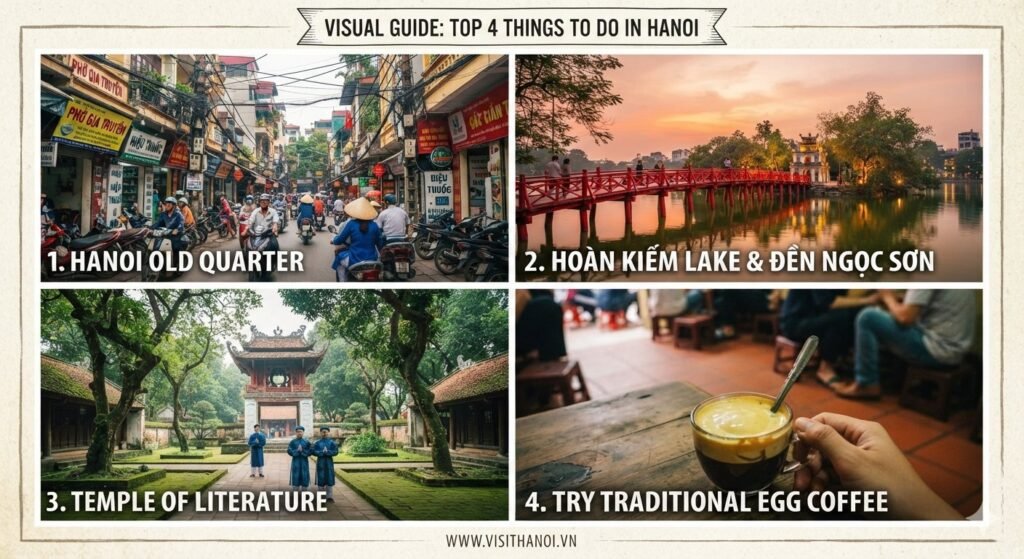

things to do in hanoi things to do in hanoi is a search phrase that can lead travelers toward one of Southeast Asia’s most fascinating capital cities. Hanoi, the capital of Vietnam, combines ancient traditions, historic buildings, busy streets, peaceful lakes, colorful markets, museums, temples, and a lively food culture. One moment you’re walking beside an old temple; the next, you’re watching hundreds of motorbikes move through a busy street. That’s Hanoi in a nutshell: energetic, historic, surprising, and full of character.
Founded along the Red River, Hanoi has a history stretching back more than a thousand years. Vietnam’s official tourism information notes that the city was named Thang Long, meaning “soaring dragon,” by Emperor Ly Thai To in 1010. Over the centuries, the city developed through periods of political change, conflict, cultural exchange, and urban growth.
For travelers, that long history creates an unusual experience. Hanoi isn’t simply a city where historical attractions have been placed behind glass. History is mixed into everyday life. Ancient streets sit beside modern cafés, traditional temples stand near busy roads, and local residents use historic neighborhoods as part of their daily routines.
Whether you’re visiting for a weekend or staying for several days, there are plenty of things to do in hanoi. The key is to combine major attractions with slower experiences that allow you to understand the character of the city.
Why Hanoi Is Worth Exploring
Hanoi offers a strong combination of history, culture, food, architecture, and everyday city life.
Unlike a destination that depends on only one famous attraction, Hanoi gives travelers many different ways to spend their time. You can explore a historic neighborhood in the morning, visit a museum in the afternoon, enjoy Vietnamese food in the evening, and finish the day beside a lake.
Some of the city’s major attractions also have significant historical importance. The Temple of Literature, for example, dates to 1070 and became home to Hanoi’s first university in 1076. The site remains an important symbol of Vietnamese education and architecture.
The city also contains the Central Sector of the Imperial Citadel of Thang Long, a UNESCO World Heritage property. UNESCO describes the citadel as a major historical center that remained connected with political power for almost thirteen centuries.
Hanoi at a Glance
| Experience | What You Can Expect |
| History | Imperial sites, temples, monuments, museums |
| Culture | Traditional arts, architecture, local customs |
| Food | Phở, bún chả, street food, Vietnamese coffee |
| Nature | Lakes, parks, gardens, and nearby countryside |
| Shopping | Markets, traditional stores, crafts, souvenirs |
| Walking | Old streets, historic neighborhoods, lakeside areas |
| Evening activities | Food, cultural performances, relaxed city walks |
| Photography | Architecture, street scenes, lakes, markets |
Explore Hanoi’s Old Quarter
One of the first places many visitors should experience is Hanoi’s Old Quarter.
The neighborhood is famous for its narrow streets, traditional architecture, shops, cafés, food stalls, and constant movement. Vietnam Tourism describes the Old Quarter as a neighborhood where Vietnamese architecture, green spaces, old shops, and street food come together.
Walking is one of the simplest ways to experience it.
Don’t rush. That’s the trick.
Take time to notice the small details: flowers being transported through the streets, vendors preparing food, small cafés tucked into buildings, and traditional shops operating alongside newer businesses.
The Old Quarter can feel busy at first. Motorbikes, pedestrians, bicycles, shopfronts, and narrow roads create a lively atmosphere. But after a while, the movement starts to feel like part of the neighborhood’s identity.
Things to Notice in the Old Quarter
- Historic shop houses
- Small family businesses
- Local cafés
- Street-food vendors
- Traditional products
- Hidden courtyards
- Narrow lanes
- Everyday local life
A relaxed walking route can be more memorable than simply checking attractions off a list.
Visit Hoan Kiem Lake
Hoan Kiem Lake is one of Hanoi’s best-known landmarks and an important part of the city’s identity.
The name is often translated as “Lake of the Restored Sword.” Vietnamese tourism sources connect the lake with a famous legend involving Emperor Ly Thai To and a magical sword returned to a giant golden turtle after victory in battle.
Beyond the legend, the lake is also a place where visitors can observe everyday Hanoi life.
People gather around the water for exercise, walking, socializing, and traditional activities. Vietnam Tourism specifically highlights locals practicing Tai Chi in the gardens beside the lake.
The lake can be especially enjoyable when you slow down and simply watch the city.
What to Do Around Hoan Kiem Lake
- Walk around the lakeside
- Take photographs
- Visit Ngoc Son Temple
- Watch local activities
- Explore nearby streets
- Stop at a café
- Enjoy the changing atmosphere throughout the day
For travelers searching for things to do in hanoi, Hoan Kiem Lake is an easy starting point because it connects naturally with other central attractions.
Discover Ngoc Son Temple
Ngoc Son Temple sits on a small island in Hoan Kiem Lake and is connected to the shore by a distinctive red bridge.
Vietnam Tourism identifies the temple as the Temple of the Jade Mountain and notes its association with the scholar Saint Van Xuong and the national hero General Tran Hung Dao.
The temple is relatively compact, so it can fit easily into a walking tour of the lake and Old Quarter.
Its location also makes it visually interesting. Surrounded by water and reached by a bright bridge, it provides a different atmosphere from the busy streets nearby.
When visiting cultural and religious sites, travelers should behave respectfully. Modest clothing, quiet behavior, and attention to posted instructions are good habits.
Learn at the Temple of Literature
The Temple of Literature is one of Hanoi’s most important historical attractions.
The site was established in 1070 during the Ly dynasty in honor of Confucius and his disciples. In 1076, it became home to Quốc Tử Giám, Hanoi’s first university.
Today, visitors can explore its courtyards, gates, gardens, architectural details, and historical monuments.
The peaceful atmosphere makes it particularly interesting because the site feels very different from Hanoi’s crowded streets.
It also provides an opportunity to understand the importance of education in Vietnamese history.
Why Visit the Temple of Literature?
The attraction combines:
- History
- Education
- Architecture
- Philosophy
- Traditional Vietnamese culture
- Photography
- Quiet gardens
For students and travelers interested in history, it can be one of the most meaningful stops in the city.
Explore the Imperial Citadel of Thang Long
The Central Sector of the Imperial Citadel of Thang Long is a UNESCO World Heritage site and one of Hanoi’s most significant historical locations.
UNESCO states that the citadel was built in the 11th century by the Ly Viet Dynasty and was constructed on the remains of a Chinese fortress dating from the 7th century. It served as a center of political power for almost thirteen centuries.
That’s a remarkable timeline.
Walking through the site gives visitors a chance to connect archaeological remains with the long political and cultural history of Hanoi.
UNESCO also highlights the property’s archaeological layers and the cultural influences that shaped the lower Red River Valley.
What Makes the Citadel Special?
The attraction isn’t just about one building.
It represents layers of history, including:
- Ancient political power
- Royal architecture
- Archaeology
- Cultural exchange
- Vietnamese national history
- Modern heritage preservation
In 2010, the site was inscribed on the UNESCO World Heritage List.
For anyone interested in the deeper story of Hanoi, this is a stop worth taking seriously.
See the Ho Chi Minh Mausoleum Area
The Ho Chi Minh Mausoleum is another major historical landmark in Hanoi.
Vietnam’s official tourism information identifies the mausoleum as a major site connected with Ho Chi Minh, one of the most important political figures in modern Vietnamese history. The structure was built between 1973 and 1975.
The surrounding Ba Dinh area contains several historically significant locations, making it more than a single attraction.
Because the site is associated with national history and remembrance, visitors should follow all official visitor rules and instructions. Opening arrangements can change, so checking current official information before visiting is sensible.
Nearby attractions can also be combined into a broader historical walking route.
See the One Pillar Pagoda
The One Pillar Pagoda is one of Hanoi’s most recognizable traditional structures.
Vietnam Tourism describes it as a Buddhist wooden pagoda built on a single stone pillar in the middle of a lotus pond. The structure dates to 1049 during the reign of Emperor Ly Thai To.
Its compact design makes it easy to combine with other historical attractions in the same general area.
The pagoda is particularly interesting for visitors who enjoy architecture because its unusual form differs from many conventional religious buildings.
Even a short visit can provide a memorable look at Vietnamese architectural traditions.
Enjoy Hanoi’s Food Culture
No guide to things to do in hanoi would feel complete without talking about food.
Hanoi has a strong food culture, and many dishes are closely connected with local traditions.
Some foods visitors may encounter include:
- Phở
- Bún chả
- Bánh mì
- Fresh spring rolls
- Vietnamese-style coffee
- Rice dishes
- Noodle dishes
- Local desserts
Vietnam Tourism specifically highlights foods such as phở and bún chả when describing the atmosphere of the Old Quarter.
Food is also one of the easiest ways to experience the city because you don’t need to visit a major attraction to discover something memorable.
Try Local Coffee
Vietnamese coffee culture deserves special attention.
You can find cafés throughout Hanoi, from traditional small establishments to modern coffee shops.
A slow coffee break can be a perfect way to escape the noise of the streets for a while. Sit down, watch people passing by, and let the city move around you.
Sometimes, honestly, that’s travel at its best.
Experience Hanoi’s Traditional Water Puppetry
Water puppetry is an important Vietnamese performing art and offers visitors a chance to experience traditional culture in a theatrical setting.
UNESCO’s documentation on the Thang Long Imperial Citadel notes that water puppetry is a living heritage form historically associated with royal entertainment and continues to be performed.
A water-puppet performance generally combines puppetry, music, storytelling, and traditional performance techniques.
For visitors, it provides a cultural experience that is quite different from sightseeing at a monument.
Rather than simply looking at history, you get to experience a form of Vietnamese artistic expression.
Visit Hanoi’s Museums
Hanoi has museums covering history, culture, art, and other subjects.
Museums can be especially useful when the weather isn’t ideal for walking. They also provide background that can make outdoor attractions easier to understand.
When visiting a museum, consider spending enough time with the exhibits rather than trying to see everything quickly.
Museum Visits Are Useful Because They Can Help You Understand
- Vietnamese history
- Traditional culture
- Art
- Architecture
- National identity
- Historical conflicts
- Everyday life
- Archaeological discoveries
If you have limited time, choose museums based on your personal interests rather than trying to visit every institution.
Walk, Photograph, and Observe Everyday Hanoi
One of the most underrated things to do in hanoi is simply walking without a strict schedule.
Hanoi rewards curiosity.
You may notice an old building, a small market, a quiet temple entrance, a street-food stall, or a tiny café that wasn’t included in your original plan.
Photography can also make you more observant. Instead of taking only famous landmark pictures, look for details:
- Doorways
- Signs
- Architecture
- Food preparation
- Flowers
- Bicycles
- Street scenes
- Lakeside reflections
- Traditional decorations
Of course, always respect people’s privacy and ask permission before photographing individuals in situations where that would be appropriate.
Explore Hanoi’s Markets and Shopping Streets
Markets can provide a different view of the city.
Rather than being designed specifically for tourists, local markets often show the practical side of urban life. You can see produce, household products, clothing, food, flowers, and other everyday items.
The Old Quarter also has a long tradition of specialized streets and small shops.
When shopping, compare prices, check product quality, and remember that bargaining customs can vary.
If you’re buying food, crafts, or souvenirs, consider choosing locally made products rather than mass-produced items when possible.
Enjoy Hanoi’s Parks and Green Spaces
Although Hanoi is a busy capital, it also has green areas where travelers can slow down.
Parks and lakes provide opportunities for:
- Walking
- Relaxing
- Photography
- People-watching
- Morning exercise
- Quiet breaks
These places can be especially valuable during a longer trip because constant sightseeing can become tiring.
A balanced itinerary doesn’t need to be packed from morning until night. Sometimes, an hour sitting beneath a tree or beside a lake is more refreshing than another attraction.
Experience Hanoi in the Evening
Hanoi changes character after sunset.
The streets become more active in some areas, cafés fill up, restaurants become lively, and evening walks can reveal a different side of the city.
Hoan Kiem Lake and the Old Quarter are particularly useful areas for evening exploration.
Instead of planning every minute, leave some room for spontaneous discoveries.
A simple evening might include:
- Walking around Hoan Kiem Lake
- Exploring nearby streets
- Enjoying dinner
- Visiting a cultural performance
- Having coffee
- Photographing illuminated buildings
- Relaxing in a public area
Always follow local safety guidance and stay aware of traffic, particularly when crossing busy roads.
Best Ways to Plan Things to Do in Hanoi
Planning doesn’t mean creating an exhausting schedule.
A better approach is to group attractions by location.
For example, you can combine several central attractions during one outing rather than repeatedly traveling across the city.
A Sample Hanoi Day
| Part of Day | Suggested Experience |
| Morning | Hoan Kiem Lake and Ngoc Son Temple |
| Late morning | Old Quarter walking |
| Lunch | Local Vietnamese food |
| Afternoon | Temple of Literature |
| Late afternoon | Imperial Citadel |
| Evening | Dinner and cultural performance |
| Night | Relaxed walk or café |
Opening hours, ticket prices, temporary closures, and visitor rules can change, so travelers should confirm details with official attraction or tourism sources before visiting.
Practical Tips for First-Time Visitors
A little preparation can make Hanoi much easier to enjoy.
Wear Comfortable Shoes
Many attractions are best experienced on foot. Comfortable shoes can make a huge difference.
Carry Water
Walking around a busy city can be tiring, especially in warm weather.
Keep Important Belongings Secure
Busy streets and markets require normal travel awareness.
Respect Religious Sites
Follow dress rules, signs, and local customs.
Check Current Information
Attractions can change their schedules or visitor arrangements.
Leave Room for Flexibility
Don’t worry if you miss one planned stop. Hanoi has plenty of unexpected experiences.
When Is the Best Time to Explore Hanoi?
Hanoi experiences seasonal changes, so the ideal time depends on what kind of weather and activities you prefer.
Rather than choosing a single “perfect” period for everyone, think about your priorities.
If walking and sightseeing are your main goals, comfortable weather can make outdoor exploration more enjoyable.
If you’re interested in festivals or cultural events, you may prefer to plan around specific dates.
Before booking, check current weather forecasts and official travel information.
Responsible and Respectful Travel in Hanoi
Good tourism isn’t just about taking photographs.
Travelers can also help protect the places they visit.
Simple habits include:
- Avoiding litter
- Respecting religious locations
- Following photography rules
- Supporting local businesses
- Avoiding damage to historic structures
- Following museum instructions
- Being considerate of residents
- Using designated paths where required
Historic places such as the Imperial Citadel are valuable precisely because they preserve evidence of earlier generations. UNESCO continues to emphasize conservation and management of the Thang Long site.
Respectful tourism helps keep these places meaningful for future visitors.
Frequently Asked Questions About Things to Do in Hanoi
What are the best things to do in Hanoi for first-time visitors?
First-time visitors can explore the Old Quarter, Hoan Kiem Lake, Ngoc Son Temple, Temple of Literature, Imperial Citadel of Thang Long, and major historical sites. Trying local food and experiencing traditional culture can complete the trip.
How many days are enough for Hanoi?
A few days can provide a good introduction to the city, while a longer stay allows more time for museums, neighborhoods, food experiences, and nearby attractions.
Is Hanoi good for walking?
Yes, several central areas are well suited to walking, particularly around Hoan Kiem Lake and the Old Quarter. However, traffic can be busy, so travelers should remain alert.
What food should visitors try in Hanoi?
Popular choices include phở, bún chả, bánh mì, Vietnamese coffee, and other local noodle and rice dishes. Travelers should choose food establishments that appear clean and well maintained.
Is the Old Quarter worth visiting?
Yes. The Old Quarter combines historic architecture, traditional businesses, cafés, food, and everyday city life. Vietnam Tourism describes it as a neighborhood that can be explored on foot.
Why is the Temple of Literature important?
It was established in 1070 and became home to Hanoi’s first university in 1076. It remains an important symbol of Vietnamese education and architecture.
Why is the Imperial Citadel of Thang Long important?
It represents a long period of Vietnamese political and cultural history. UNESCO states that the site was connected with political power for almost thirteen centuries and inscribed it as a World Heritage property in 2010.
What can travelers do in Hanoi besides visiting monuments?
Travelers can explore cafés, try local food, visit markets, walk through neighborhoods, enjoy parks and lakes, attend cultural performances, and observe everyday city life.
Final Thoughts on Things to Do in Hanoi
things to do in hanoi things to do in hanoi isn’t simply a search for a list of attractions. It’s an invitation to explore a city where history, culture, food, architecture, and everyday life exist side by side.
From Hoan Kiem Lake and the Old Quarter to the Temple of Literature and the UNESCO-listed Imperial Citadel of Thang Long, Hanoi offers experiences for history lovers, food enthusiasts, photographers, families, and curious travelers.
The best approach is to combine famous landmarks with slower experiences. Walk a little farther, stop for coffee, try local food, explore a side street, visit a cultural attraction, and leave enough time to simply observe.
With thoughtful planning and an open mind, things to do in hanoi things to do in hanoi can become much more than a travel checklist—it can become the starting point for discovering the history, culture, people, and everyday energy that make Hanoi such a memorable destination.
Stay connected with VoxTrend for the latest ideas, trends, updates & inspiring stories!