
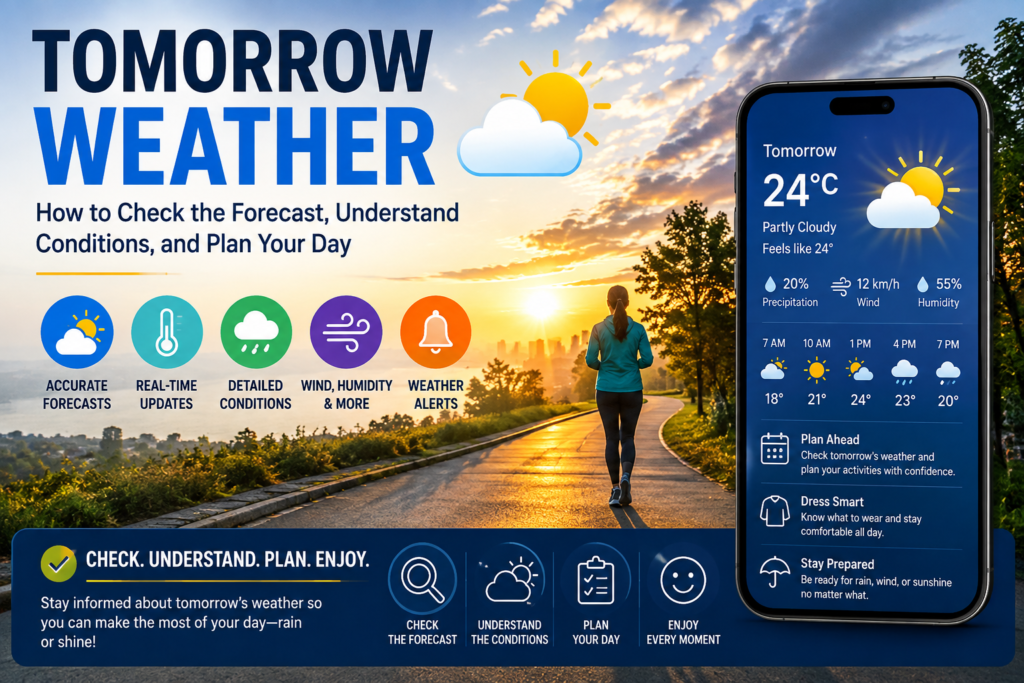

Tomorrow weather is one of the most common things people search for before starting a new day. Whether you’re planning a school trip, going to work, arranging an outdoor event, traveling to another city, or simply deciding what to wear, knowing what the weather may be like tomorrow can make daily life easier. A quick look at the forecast can help you prepare for sunshine, rain, strong winds, cold temperatures, or changing conditions.
Weather forecasts have become much easier to access than they were in the past. Today, people can check temperatures, rainfall chances, wind speed, humidity, sunrise and sunset times, and other useful details within seconds. However, understanding what those numbers actually mean is just as important as finding the forecast itself.
This guide explains tomorrow weather in simple English. It covers how forecasts are created, which weather details matter most, why predictions can change, and how you can use forecast information to plan your day wisely. Because weather varies from place to place, always check a reliable local forecast for the exact city or area you care about.
What Does Tomorrow Weather Mean?
The phrase tomorrow weather simply refers to the expected atmospheric conditions for the next day. It can include information about temperature, rain, clouds, wind, humidity, storms, and other conditions. In everyday conversation, people usually use the phrase when they want to know what the weather will probably be like on the following day.
For example, someone might ask whether tomorrow will be sunny or rainy before planning an outdoor activity. A traveler may check the forecast before leaving for another city. Likewise, families may look at the expected temperature before deciding what clothes to wear.
A weather forecast isn’t a guarantee. Instead, it’s a scientific prediction based on observations, computer models, satellite information, radar data, and atmospheric measurements. Conditions can change, so the forecast may be updated several times before tomorrow arrives.
Why Checking Tomorrow Weather Is Important
Checking tomorrow weather can be useful for almost everyone. Weather affects transportation, outdoor activities, agriculture, travel, sports, construction, and many other parts of everyday life. Even a simple change from dry conditions to heavy rain can affect someone’s plans.
Knowing the forecast ahead of time also gives people an opportunity to prepare. If rain is expected, you might carry an umbrella or choose an indoor activity. If temperatures are expected to fall, warmer clothing may be appropriate. If strong winds are predicted, outdoor plans may need extra care.
Here are some common reasons people check tomorrow’s forecast:
- Planning outdoor activities
- Choosing suitable clothing
- Preparing for travel
- Checking driving conditions
- Organizing sports or school events
- Planning gardening or farming work
- Preparing for possible rain
- Understanding temperature changes
- Deciding whether an event should be indoors or outdoors
- Preparing for severe weather alerts
In short, a few minutes spent checking the forecast can save time and prevent unpleasant surprises.
How Weather Forecasts Are Created
Modern weather forecasting is based on a huge amount of information. Meteorologists collect data from weather stations, satellites, radar systems, aircraft, ocean instruments, and other observation systems. This information helps scientists understand what is happening in the atmosphere right now.
Computers then process enormous amounts of weather data using numerical weather prediction models. These models attempt to calculate how atmospheric conditions could develop over time. Meteorologists study the model results and other observations before producing forecasts.
Several types of information are especially important:
- Air temperature
- Atmospheric pressure
- Wind direction and speed
- Humidity
- Cloud cover
- Rainfall
- Snowfall
- Radar observations
- Satellite imagery
- Ocean temperatures
- Previous weather patterns
Even with advanced technology, forecasting isn’t perfect. The atmosphere is complex, and small changes can sometimes produce different results. That’s why forecasts may be updated as new information becomes available.
Temperature in Tomorrow Weather Forecasts
Temperature is usually the first detail people notice when checking tomorrow weather. A forecast commonly provides the expected high and low temperatures for the day.
The high temperature represents the approximate warmest period, while the low temperature represents the approximate coolest period. These temperatures don’t necessarily occur exactly at noon or midnight. Local conditions, cloud cover, wind, and other factors influence when temperatures rise and fall.
It’s also helpful to understand the difference between actual temperature and how the air may feel. Wind can make cool conditions feel colder, while humidity can make warm weather feel more uncomfortable.
When checking tomorrow’s temperature, consider:
- Expected daytime high
- Expected nighttime low
- Morning temperature
- Afternoon conditions
- Evening temperature
- Wind conditions
- Humidity
- Cloud cover
Looking at the entire day’s temperature pattern gives you a much better idea of what to expect than looking at one number alone.
Rain Chances and Tomorrow Weather
Rain is another major reason people search for tomorrow weather. Forecasts often show a percentage representing the probability of precipitation. This number can sometimes be confusing.
A precipitation probability indicates the likelihood of measurable precipitation occurring in the forecast area during a particular period. It doesn’t simply mean that the percentage of the area will receive rain, nor does it automatically tell you how long the rain will last.
For example, a forecast showing a moderate chance of rain suggests that precipitation is possible, but it doesn’t mean rain will definitely fall continuously.
When rain is possible tomorrow, check additional details such as:
- Probability of precipitation
- Expected rainfall amount
- Expected timing
- Storm possibility
- Hourly forecast
- Radar information
- Severe weather alerts
This information can help you decide whether a light jacket is enough or whether changing your plans would be sensible.
Understanding Wind Conditions
Wind is sometimes overlooked when people check the forecast, but it can make a major difference. Strong winds can make temperatures feel colder and may create difficult conditions for outdoor activities.
Weather forecasts may provide both sustained wind speed and stronger gusts. A gust is a short burst of faster wind. Even when average winds appear moderate, strong gusts can still affect outdoor conditions.
Wind direction can also provide useful information. It tells you where the wind is coming from and can help explain changes in temperature and humidity.
For tomorrow, pay attention to:
- Average wind speed
- Maximum gusts
- Wind direction
- Changes during the day
- Wind-related warnings
If you’re planning an outdoor event, checking wind conditions along with temperature and rainfall can give you a more complete picture.
Humidity and How It Feels Outside
Humidity measures the amount of water vapor in the air. It can influence how comfortable the weather feels, particularly during warm conditions.
When humidity is high, sweat may evaporate more slowly from the skin. As a result, warm weather can feel hotter and more uncomfortable. On the other hand, low humidity can make the air feel dry.
This is why two locations with the same temperature can sometimes feel very different.
When checking tomorrow weather, humidity can be particularly useful if you’re planning to spend several hours outdoors. It can help you understand whether the day may feel fresh, sticky, dry, or comfortable.
Humidity isn’t the only factor that affects comfort, though. Wind, sunlight, cloud cover, and temperature all play a role.
Cloud Cover and Sunshine
Cloud cover is another important part of a weather forecast. A day described as sunny, partly cloudy, mostly cloudy, or overcast can have noticeably different conditions.
Clouds can influence temperature by reducing the amount of direct sunlight reaching the ground. They can also be connected with changing weather systems and precipitation.
A forecast may describe conditions using terms such as:
- Clear
- Mostly sunny
- Partly cloudy
- Mostly cloudy
- Overcast
- Showers
- Thunderstorms
If you’re planning photography, sightseeing, sports, or another outdoor activity, cloud conditions can be just as useful as temperature.
And, of course, a little sunshine can make an ordinary day feel much brighter.
Why Tomorrow Weather Forecasts Can Change
One important thing to remember is that forecasts are predictions, not promises. Tomorrow weather information can change as meteorologists receive new observations and updated model calculations.
Atmospheric systems don’t always behave exactly as predicted. A storm may move slightly faster or slower than expected. Rain may develop in one area but miss another nearby location. Temperatures can also change because of cloud cover, wind shifts, or other atmospheric developments.
Forecast confidence is generally higher when the time period is close and atmospheric conditions are well understood. Still, even a next-day forecast can change.
This is why it’s smart to check the forecast again before heading outside, particularly when weather conditions could affect safety or travel.
Hourly Tomorrow Weather Forecast
A daily forecast gives a broad overview, but an hourly forecast can provide much more detail. This is especially helpful when weather conditions are expected to change during the day.
For instance, the morning could be dry while rain is expected later. Another day might begin cool and cloudy before becoming warmer and sunnier in the afternoon.
An hourly forecast may show:
- Temperature
- Rain probability
- Cloud cover
- Wind
- Humidity
- Weather conditions
If you’re planning something at a specific time, checking the hourly forecast is often more useful than looking only at the daily summary.
However, remember that hourly forecasts can also change. Treat them as helpful guidance rather than an absolute guarantee.
Tomorrow Weather for Travel Planning
Weather plays an important role in travel. Before taking a road trip, flight, train journey, or local excursion, checking tomorrow weather can help you prepare.
Travelers should consider more than just the temperature. Rain, storms, fog, strong winds, snow, and extreme heat may affect transportation and outdoor plans.
A useful travel weather checklist includes:
- Departure location
- Destination weather
- Expected temperatures
- Rain or snow chances
- Wind conditions
- Visibility
- Severe weather alerts
- Road conditions where applicable
- Hourly forecast
If you’re traveling between different cities, don’t assume they will have identical weather. Conditions can change significantly over relatively short distances, especially in areas with mountains, coastlines, deserts, or large differences in elevation.
Tomorrow Weather and What to Wear
One of the simplest uses of a weather forecast is choosing appropriate clothing. You don’t need to make things complicated. Look at the temperature, wind, rain chance, and overall conditions.
For cool weather, warmer layers may be useful. During warm conditions, lightweight clothing may feel more comfortable. If rain is expected, waterproof clothing or an umbrella can be practical.
Your clothing decision should also consider how long you’ll be outside. A short trip from your home to a vehicle requires different preparation from spending several hours outdoors.
A basic approach is:
- Check the morning temperature.
- Check the afternoon high.
- Look at the evening forecast.
- Check rain probability.
- Consider wind.
- Dress for the conditions you expect to experience.
That simple routine can make tomorrow much more comfortable.
Tomorrow Weather and Outdoor Activities
Outdoor plans are often closely connected to weather. Sports, picnics, hiking, photography, gardening, school activities, and family gatherings can all be influenced by atmospheric conditions.
If the forecast looks favorable, you can plan confidently while still keeping a backup option in mind. If rain or severe weather is possible, consider changing the timing or location.
For outdoor activities, pay particular attention to:
- Rain
- Thunderstorms
- Wind
- Temperature
- Heat conditions
- Visibility
- Severe weather warnings
It’s always better to make a sensible adjustment than to ignore a serious weather warning. Forecast information is there to help people make informed decisions.
Reliable Sources for Tomorrow Weather
There are many websites and mobile applications that provide weather forecasts. However, not every weather page presents information in the same way.
For the most dependable information, consider official national meteorological services, established weather organizations, and reputable forecasting platforms. Local authorities can also provide important warnings during severe weather.
When comparing forecasts, look for:
- A clearly stated location
- Updated forecast time
- Hourly information
- Daily forecast
- Precipitation chances
- Temperature
- Wind information
- Weather alerts
If different services show slightly different forecasts, don’t panic. That’s normal. Forecasting models can produce different results, especially when weather systems are uncertain.
For important decisions, give greater attention to official warnings and local meteorological information.
How to Read a Weather App
Weather apps can provide a lot of information, but you don’t need to understand every symbol to get useful information.
Start with the basics. Find your location and look at the expected temperature and weather condition. Then check rain probability, wind, and hourly conditions.
Many apps use icons to represent conditions such as sunshine, clouds, rain, snow, and thunderstorms. These icons are designed to provide a quick visual summary.
A good habit is to look at the forecast twice:
- First, check the general daily forecast.
- Next, check the hours that matter to your plans.
This approach gives you useful information without overwhelming you with technical data.
Factors That Influence Tomorrow Weather
Weather is influenced by many natural factors. The atmosphere is constantly moving and changing, and different systems interact with one another.
Some major influences include:
| Factor | How It Can Affect Weather |
| Temperature | Influences warmth and cold |
| Air pressure | Helps identify changing weather systems |
| Wind | Moves air and weather systems |
| Humidity | Affects moisture and comfort |
| Clouds | Influence sunlight and temperature |
| Mountains | Can change wind and rainfall patterns |
| Oceans | Influence nearby temperature and moisture |
| Seasons | Create broader weather patterns |
| Storm systems | Can bring rain, wind, or severe conditions |
Understanding these factors helps explain why weather can vary between nearby locations.
Local Weather Versus Regional Weather
A regional forecast can provide a useful overview, but local weather may be different. One neighborhood may experience rain while another nearby area remains dry.
Geography is one reason for these differences. Mountains, rivers, lakes, coastlines, buildings, and urban areas can influence local conditions.
For this reason, search for tomorrow weather using your exact city or area rather than relying only on a national forecast.
For example, someone traveling to another city shouldn’t assume that the destination has the same temperature or rainfall as their home. Checking the specific destination forecast is a simple but valuable step.
Severe Weather and Safety Information
Normal weather forecasts are useful for planning, but severe weather alerts are especially important. If a recognized meteorological service issues a warning, take it seriously and follow local safety guidance.
Severe weather can include events such as thunderstorms, flooding, extreme heat, heavy snow, or strong winds, depending on the region.
If severe weather is expected tomorrow:
- Check official alerts.
- Follow local instructions.
- Avoid unnecessary travel when authorities advise against it.
- Keep important devices charged.
- Monitor updates as conditions change.
- Have a simple backup plan.
The goal isn’t to worry about every possible weather change. Instead, it’s about staying informed and making sensible decisions.
Common Mistakes People Make When Checking Tomorrow Weather
Although checking a forecast is easy, people sometimes misunderstand the information. One common mistake is assuming that a percentage means rain will definitely occur. Another is looking only at the daily high temperature without checking the morning or evening conditions.
Other mistakes include:
- Checking the wrong location
- Ignoring the hourly forecast
- Forgetting to check wind
- Assuming forecasts never change
- Ignoring official weather warnings
- Looking at outdated forecast information
- Focusing only on temperature
- Assuming nearby places have identical weather
Avoiding these mistakes can make weather information much more useful.
How Accurate Is Tomorrow Weather?
Next-day forecasts are generally useful for planning, but their accuracy varies depending on the location, weather pattern, and forecasting system.
Stable weather patterns are usually easier to predict. Rapidly changing conditions can be more difficult. For example, predicting a broad temperature trend may be easier than predicting the exact location and timing of a small rain shower.
The closer the forecast period gets, the more new observations become available. That’s why checking an updated forecast on the day before your plans is a good practice.
If the weather matters greatly to an activity, check again shortly before leaving.
A Simple Tomorrow Weather Checklist
You don’t need to spend a long time studying meteorology to prepare for the next day. A quick checklist can be enough.
Before making plans, check:
- Temperature: How warm or cold will it be?
- Rain: Is precipitation expected?
- Wind: Will conditions be calm or windy?
- Clouds: Will the sky be clear or cloudy?
- Humidity: Will the air feel dry or humid?
- Hourly forecast: When are conditions expected to change?
- Warnings: Are there official weather alerts?
- Location: Are you checking the correct city or area?
This simple routine can give you a practical understanding of tomorrow weather.
Frequently Asked Questions About Tomorrow Weather
What does tomorrow weather mean?
Tomorrow weather refers to the expected atmospheric conditions for the following day. It can include temperature, rain, wind, clouds, humidity, and weather warnings. Because conditions differ by location, you should check the forecast for your specific city or area.
Can tomorrow weather change?
Yes. Weather forecasts can change when new observations and updated computer-model information become available. A forecast is a prediction, so it’s wise to check an updated version before making important plans.
What is the best way to check tomorrow weather?
Use a reputable weather service or your country’s official meteorological organization. Enter the exact location and check both the daily and hourly forecast. For potentially dangerous conditions, pay special attention to official warnings.
Does a rain percentage mean it will definitely rain?
No. A precipitation percentage represents the likelihood of measurable precipitation under the forecast definition. It shouldn’t automatically be interpreted as a promise that rain will fall continuously or across the entire area.
Why can nearby cities have different weather?
Weather can vary because of geography, elevation, coastlines, mountains, urban areas, wind patterns, and local atmospheric conditions. Two nearby cities can therefore have different temperatures or rainfall.
Should I check the hourly forecast?
Yes, especially when you’re planning something at a particular time. An hourly forecast can show how temperature, rain chances, clouds, and wind may change throughout the day.
Is a weather app always accurate?
No forecast is perfect. Weather apps depend on forecasting models and data, and different services may produce slightly different results. For important or severe weather situations, official local warnings are especially valuable.
Final Thoughts on Tomorrow Weather
Tomorrow weather information can be a simple but powerful planning tool. By checking temperature, precipitation, wind, humidity, cloud cover, hourly conditions, and official alerts, you can make better decisions about clothing, travel, school, work, and outdoor activities.
The key is to remember that forecasts are predictions rather than guarantees. Weather can change, so checking an updated forecast close to the time of your plans is a smart habit. Most importantly, use reliable local sources when conditions could affect safety.
Whether you’re hoping for sunshine, preparing for rain, or simply wondering what the next day may bring, understanding tomorrow weather helps you start the day prepared, informed, and ready for whatever comes your way.
Stay connected with VoxTrend for the latest ideas, trends, updates & inspiring stories!