
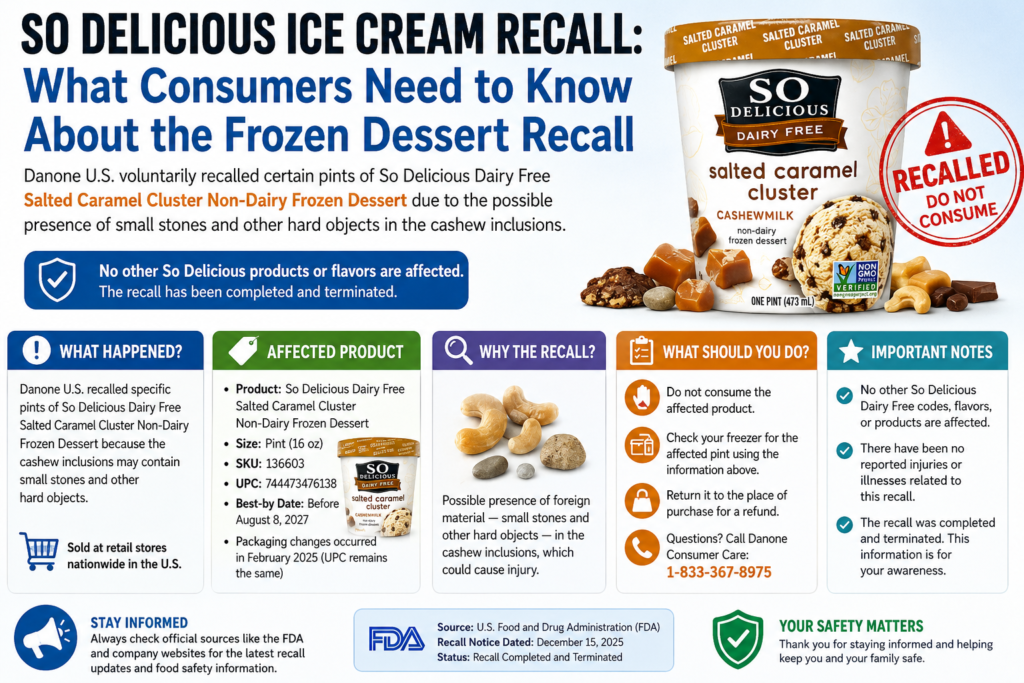

The so delicious ice cream recall became an important food-safety story after Danone U.S. announced a voluntary recall of certain So Delicious Dairy Free Salted Caramel Cluster Non-Dairy Frozen Dessert pints in December 2025. The recall was issued because the affected dessert could contain foreign materials, including small stones and other hard objects within the cashew inclusions. The U.S. Food and Drug Administration published the announcement on December 15, 2025.
Although the word “ice cream” is commonly used when discussing the product, the recalled item is technically a non-dairy frozen dessert. The affected product was distributed to retailers nationwide, and consumers were advised not to eat it. Importantly, the recall was limited to a specific So Delicious product and specific identifying information. The FDA stated that no other So Delicious Dairy Free codes, flavors, or products were affected.
There is also a reassuring update for consumers. The FDA currently lists this recall as completed and terminated, meaning the official recall process has ended. Still, understanding the original warning is useful because consumers may have an affected product stored in a freezer or may encounter old information about the recall online.
So Delicious Ice Cream Recall at a Glance
The so delicious ice cream recall involved one particular frozen dessert product rather than the entire So Delicious brand. Knowing the exact product information is the best way to avoid unnecessary concern about other flavors.
| Recall detail | Information |
| Brand | So Delicious Dairy Free |
| Company | Danone U.S. |
| Product | Salted Caramel Cluster Non-Dairy Frozen Dessert |
| Product size | 16-ounce pint |
| SKU | 136603 |
| UPC | 744473476138 |
| Best-by dates | Before August 8, 2027 |
| Reason | Potential foreign material |
| Concern | Small stones and other hard objects in cashew inclusions |
| Distribution | Retail stores nationwide |
| Recall announced | December 15, 2025 |
| Consumer action | Do not consume affected product |
| Refund information | Contact So Delicious Consumer Care |
| Current FDA status | Recall completed and terminated |
These details come from the FDA’s official recall announcement. Because food recalls can involve very specific lot numbers, dates, and package sizes, consumers shouldn’t rely only on the brand name when checking a product.
What Product Was Included in the So Delicious Ice Cream Recall?
The recalled product was So Delicious Dairy Free Salted Caramel Cluster Non-Dairy Frozen Dessert sold in pint containers. It is a dairy-free frozen dessert made with cashew-based inclusions, and the potential problem was associated with those inclusions.
According to Danone’s announcement, the affected pints had best-by dates before August 8, 2027. The product could be identified using SKU 136603 and UPC 744473476138. These details were printed or associated with the product packaging and are particularly useful when checking an item at home.
The recall wasn’t a warning about every So Delicious frozen dessert. Danone specifically said the issue was isolated to the Salted Caramel Cluster pint with the indicated identifying information. Other So Delicious flavors, codes, and products were not included in this recall.
That distinction matters. A recall announcement can sound broad when people first see the brand name in a headline, but food recalls are often limited to particular products or production codes.
Why Was the So Delicious Frozen Dessert Recalled?
The main reason behind the so delicious ice cream recall was the potential presence of foreign material in the cashew inclusions. Danone and the FDA described the possible foreign materials as small stones and other hard objects.
Foreign material in food is taken seriously because consumers don’t expect hard objects to be present in a frozen dessert. Depending on the size and nature of the material, eating contaminated food could potentially cause injury to the mouth, teeth, throat, or digestive system.
Hawaii’s Department of Health also warned residents about the recall and noted that hard or sharp foreign objects can present an injury risk. The department reported that there were no reported cases of illness or injury in Hawaii at the time of its December 2025 alert.
In other words, the recall was a precaution designed to keep potentially affected products away from consumers. That’s exactly how a responsible food-safety system is supposed to work.
How Can Consumers Identify the Recalled Product?
Checking the packaging is the most reliable way to determine whether a container is part of the recall.
Consumers should look for the following information:
- Brand: So Delicious Dairy Free
- Flavor: Salted Caramel Cluster
- Product type: Non-Dairy Frozen Dessert
- Size: 16-ounce pint
- SKU: 136603
- UPC: 744473476138
- Best-by date: Before August 8, 2027
The best-by information is especially important because the recall covered products with dates before August 8, 2027. The relevant information can be found on the bottom of the container.
Retailers also posted their own recall notices. Target, for example, listed the recalled product as its 16-ounce So Delicious Salted Caramel Cluster Cashew Milk Frozen Dessert and identified the recall date as December 15, 2025.
Is Every So Delicious Product Part of the Recall?
No. This is one of the most important facts about the so delicious ice cream recall.
The recall was limited to the Salted Caramel Cluster Non-Dairy Frozen Dessert pints with the specified product information. Danone explicitly stated that no other So Delicious Dairy Free codes, flavors, or products were affected.
That means consumers shouldn’t assume that every So Delicious frozen dessert is unsafe simply because they saw a recall headline.
Food manufacturers regularly issue targeted recalls when a problem can be traced to a particular product, ingredient, production run, or package. Limiting the recall helps remove the potentially affected food while avoiding unnecessary removal of products that aren’t involved.
Still, if there’s any doubt about a particular container, checking the package information against the official recall notice is the sensible choice.
Where Was the Recalled So Delicious Dessert Sold?
The recalled product was distributed through retail stores nationwide in the United States. Reports and retailer notices identified major retailers that carried the product, including Target, Walmart, and Publix.
Because the product had broad distribution, the recall wasn’t limited to one state or one local store chain.
That nationwide distribution explains why food-safety agencies and retailers acted quickly. Once a manufacturer identifies a potential safety issue in a product that has already reached stores, retailers need to remove affected inventory and communicate with consumers.
For shoppers, the lesson is simple: don’t assume that a recall applies only to a particular region unless the official notice specifically says so.
What Should You Do If You Have the Recalled Product?
If you discover a container matching the recalled product information, don’t eat it.
The FDA and Danone advised consumers who purchased the affected product not to consume it. Danone provided a consumer-care contact for people seeking information about refunds.
A sensible response is to:
- Check the product name and flavor.
- Check the package size.
- Compare the UPC with the recall information.
- Check the best-by date on the bottom.
- If the product matches the recalled information, don’t consume it.
- Follow the manufacturer’s current instructions for disposal or refund.
- Contact consumer care if you need assistance.
There’s no need to panic. A recall is an official safety measure intended to identify potentially affected products and remove them from circulation.
How Can You Request a Refund?
Danone provided a dedicated So Delicious Dairy Free Care Line for consumers who had questions about the recall or wanted information about refunds.
The FDA’s recall announcement lists the So Delicious Consumer Care number as 1-833-367-8975. The company also provided an online consumer contact form.
Consumers should keep in mind that recall procedures can change after the initial announcement, especially after a recall has been completed. If you’re seeking a refund now, it’s best to follow the latest instructions provided by the manufacturer or retailer.
Retailers may also have their own procedures for handling recalled products. Target’s recall notice, for example, directed customers toward the government agency or manufacturer for specific recall information and remedy instructions.
What Health Risks Were Associated With the Recall?
The primary concern wasn’t bacteria or an undeclared allergen. It was the possibility of physical foreign material in the dessert.
Small stones or other hard objects could potentially cause physical injury if swallowed. Hawaii’s Department of Health explained that hard or sharp objects in food may damage the mouth, teeth, gums, throat, stomach, or intestines.
However, it’s important not to exaggerate the situation. A recall notice identifies a potential hazard; it doesn’t mean that every container definitely contains a foreign object.
The official information available from the FDA indicates that the recall was precautionary and that the company had identified and corrected the issue.
Were There Reports of Injuries or Illnesses?
At the time of the Hawaii Department of Health’s December 17, 2025 alert, the department reported that there had been no reported cases of injury or illness in Hawaii connected with the recalled product.
That information should provide some reassurance, while also showing why the recall mattered.
Food recalls are often announced before widespread injuries occur. Manufacturers and regulators don’t have to wait for numerous people to become sick or injured before taking action. When a credible potential hazard is identified, removing the affected product can prevent problems.
If someone believes they were injured or became ill after consuming a recalled food, they should seek appropriate medical attention and provide healthcare professionals with relevant information about what they consumed.
What Did Danone Do After the Recall?
Danone U.S. said it worked quickly with retail partners to remove the potentially affected product from store shelves. The company also stated that it had identified and corrected the issue and intended to bring the product back once it could be safely sold.
This is an important part of understanding food recalls. A recall isn’t necessarily an admission that an entire product line is permanently unsafe.
Instead, manufacturers may investigate the source of a problem, correct the manufacturing or supply-chain issue, remove affected products, and improve controls before returning a product to the market.
The company’s response also highlights why traceability matters in modern food production. Identifying a specific product, UPC, and date range can allow a manufacturer to narrow the recall rather than removing every item carrying the same brand.
What Does “Recall Completed and Terminated” Mean?
The current FDA page contains an important update that people searching for the so delicious ice cream recall may miss.
The FDA states that the recall has been completed and terminated.
In simple terms, this means the official recall process is no longer active in the way it was when the announcement was first issued.
However, that doesn’t mean consumers should eat an old product that matches the recalled information simply because the online recall status now says completed. A recalled container shouldn’t be treated as safe merely because the recall has ended.
The termination indicates that the recall action itself has been completed. It doesn’t change the identifying information of the product that was recalled.
Why Food Recalls Are Important
Food recalls can seem alarming, but they are actually an important part of consumer protection.
Modern food production involves many steps. Ingredients may come from different suppliers, products can move through multiple facilities, and finished goods may be shipped across a large geographic area.
When a problem is discovered, a recall allows companies and regulators to act quickly.
A well-managed recall can:
- Identify potentially affected products.
- Alert consumers.
- Remove products from retail shelves.
- Reduce the chance of injury or illness.
- Help manufacturers investigate the cause.
- Encourage corrective action.
- Improve future production controls.
So, while seeing a recall notice isn’t pleasant, the system itself is designed to protect people.
The Role of the FDA in the So Delicious Ice Cream Recall
The U.S. Food and Drug Administration plays a central role in monitoring food safety and communicating recalls involving products under its authority.
In this case, the FDA published Danone’s voluntary recall announcement and provided the identifying information consumers needed. The FDA page also currently records the recall as completed and terminated.
It’s worth remembering that an FDA recall page may contain information supplied by the manufacturer. The agency publishes company announcements as a public service and does not necessarily mean the FDA independently endorses every statement made by a company.
For consumers, official government recall pages are among the most useful sources when trying to verify whether a food product is affected.
Retailers Also Played an Important Role
Food safety doesn’t stop with the manufacturer.
Retailers must respond to recall notices by identifying affected inventory and taking appropriate products off shelves. Some stores also publish their own recall alerts so customers can recognize products they may have purchased.
Target, for example, published a recall page identifying the So Delicious Salted Caramel Cluster Cashew Milk Frozen Dessert and provided its internal item numbers alongside the recall information.
Hawaii’s Department of Health likewise reported that affected products had been sold at retailers such as Target, Whole Foods, and Walmart in Hawaii. The department said it was working with local stores to ensure the recalled product was no longer available for sale.
This cooperation between manufacturers, regulators, and retailers is a key part of making recalls effective.
Why the Cashew Inclusions Matter
The potential problem was specifically associated with the cashew inclusions in the Salted Caramel Cluster frozen dessert.
The product’s texture and flavor depend partly on these inclusions, but ingredients that contain pieces or clusters can also require careful control during processing.
The recall announcement didn’t provide a detailed public explanation of exactly how the foreign material entered the product. It did, however, state that the company had identified and corrected the issue.
That distinction is worth noting. Consumers sometimes expect a recall notice to explain every technical detail of a manufacturing investigation, but companies and regulators may release only the information necessary for public safety while an investigation or corrective process is underway.
How Consumers Can Stay Safe During Food Recalls
The so delicious ice cream recall is a good reminder that consumers can take a few simple steps to stay informed.
First, pay attention to the product name and package information. Don’t rely solely on a photograph because packaging can change over time.
Second, look for official sources. Government agencies, manufacturers, and major retailers are usually more reliable than social-media posts or screenshots shared without context.
Third, remember that recalls can be updated. A recall may be expanded, narrowed, completed, or terminated as more information becomes available.
Finally, if you’re uncertain, don’t take chances with food safety. Verify the product information before consuming it.
Common Mistakes People Make When Reading Recall Notices
Recall notices can be confusing, particularly when headlines use broad language.
One common mistake is assuming that an entire brand is affected. In this case, the recall was limited to a specific Salted Caramel Cluster frozen dessert product.
Another mistake is looking only at the flavor name. Product size, UPC, SKU, and date can all matter.
A third mistake is relying on old articles without checking for updates. The FDA’s current page says the recall has been completed and terminated, so the latest official status is important when researching the issue.
Lastly, consumers sometimes assume that a “best-by” date is the only identifying feature. It isn’t. The safest approach is to compare all available product information.
So Delicious Ice Cream Recall and Dairy-Free Consumers
The recall was especially relevant to people who choose dairy-free frozen desserts.
So Delicious has a strong presence in the dairy-free market, and many consumers choose its products because they avoid traditional dairy ingredients. A recall involving a popular dairy-free product can therefore be especially important for shoppers who depend on these alternatives.
Still, the recall wasn’t related to the product being dairy-free. The issue concerned potential physical foreign material in the cashew inclusions.
That distinction helps prevent misinformation. Consumers shouldn’t conclude that dairy-free frozen desserts as a category are unsafe based on this single product recall.
What About Canada?
There was also a related recall communication for So Delicious Dairy Free Salted Caramel Non-Dairy Frozen Dessert in Canada.
The Canadian So Delicious FAQ identifies the affected product as Salted Caramel Non-Dairy Frozen Dessert with a best-by date before August 8, 2027. It also provides product identification information and says the recall was initiated in cooperation with the Canadian Food Inspection Agency.
This information is useful for Canadian consumers because product codes and package sizes can differ between markets.
Therefore, consumers should always check the recall information for the country where they purchased the product rather than assuming that U.S. and Canadian labeling is identical.
Frequently Asked Questions About the So Delicious Ice Cream Recall
Was So Delicious ice cream recalled?
Yes. A specific So Delicious Dairy Free Salted Caramel Cluster Non-Dairy Frozen Dessert was voluntarily recalled by Danone U.S. in December 2025 because of the potential presence of small stones and other hard foreign materials in the cashew inclusions.
Is all So Delicious ice cream recalled?
No. The recall was limited to the specified Salted Caramel Cluster Non-Dairy Frozen Dessert product and identifying codes. Danone stated that no other So Delicious Dairy Free codes, flavors, or products were affected.
What was the reason for the recall?
The product was recalled because it could potentially contain foreign materials, including small stones and other hard objects, within the cashew inclusions.
What is the UPC for the recalled product?
The U.S. recalled product has UPC 744473476138 and SKU 136603. The affected best-by dates are before August 8, 2027.
Should consumers eat a recalled container?
No. Consumers should not consume a product that matches the recalled information. They should follow the manufacturer’s or retailer’s instructions regarding disposal or refunds.
Has the So Delicious recall ended?
The FDA currently lists the recall as completed and terminated.
Were people injured by the recalled product?
Hawaii’s Department of Health reported no cases of injury or illness in Hawaii at the time of its December 2025 notice.
Can consumers get a refund?
Danone provided a Consumer Care Line and online contact option for consumers seeking information about refunds.
Final Thoughts on the So Delicious Ice Cream Recall
The so delicious ice cream recall involved a specific Salted Caramel Cluster Non-Dairy Frozen Dessert product that was voluntarily recalled because of the potential presence of small stones and other hard foreign materials in its cashew inclusions. The recall was nationwide in the United States, but it did not affect every So Delicious product.
For consumers, the most important lesson is to check the exact product information instead of relying on a brand name or social-media headline. The relevant U.S. product had SKU 136603, UPC 744473476138, and best-by dates before August 8, 2027. Consumers who find matching products should not consume them and should follow the appropriate refund or disposal guidance.
The good news is that the FDA now lists the recall as completed and terminated, while Danone said it had identified and corrected the underlying issue. Food recalls can certainly be concerning, but they also demonstrate how manufacturers, retailers, health agencies, and consumers can work together to protect food safety. In short, staying informed and checking official information remains the smartest response to the so delicious ice cream recall.
Stay connected with VoxTrend for the latest ideas, trends, updates & inspiring stories!